
books
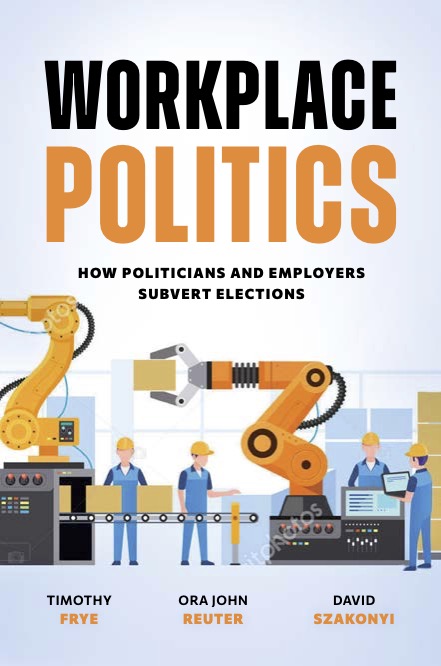
Workplace Politics: How Politicians and Employers Subvert Elections, Oxford University Press, 2025 (with Timothy Frye and Ora John Reuter)
In many countries politicians rely on employers to influence the voting behavior of their employees, but this type of voter mobilization has received very little attention. Workplace Politics draws on unique surveys of firm managers and employees in eight countries, as well as a wealth of fine-grained observational data and qualitative interviews from Russia, to demonstrate that workplace mobilization is common, often coercive, and unpopular with many voters. It argues that when firm managers depend on the state, cannot easily move their assets, or can easily replace workers, politicians can induce employers to get their workers to the polls.
In these settings, politicians and employers can use workplace mobilization to diminish voter autonomy, undermine electoral integrity, and skew electoral outcomes in favor of entrenched political groups. But because workplace mobilization is unpopular in the broader electorate, politicians use this strategy less frequently in information-rich settings, where voters are likely to learn about it. This book helps explain why countries whose economies are dominated by state interventions in markets, immobile capital, and slack labor markets may be especially prone to clientelism and autocratic rule and contributes to core debates in comparative politics and political economy.
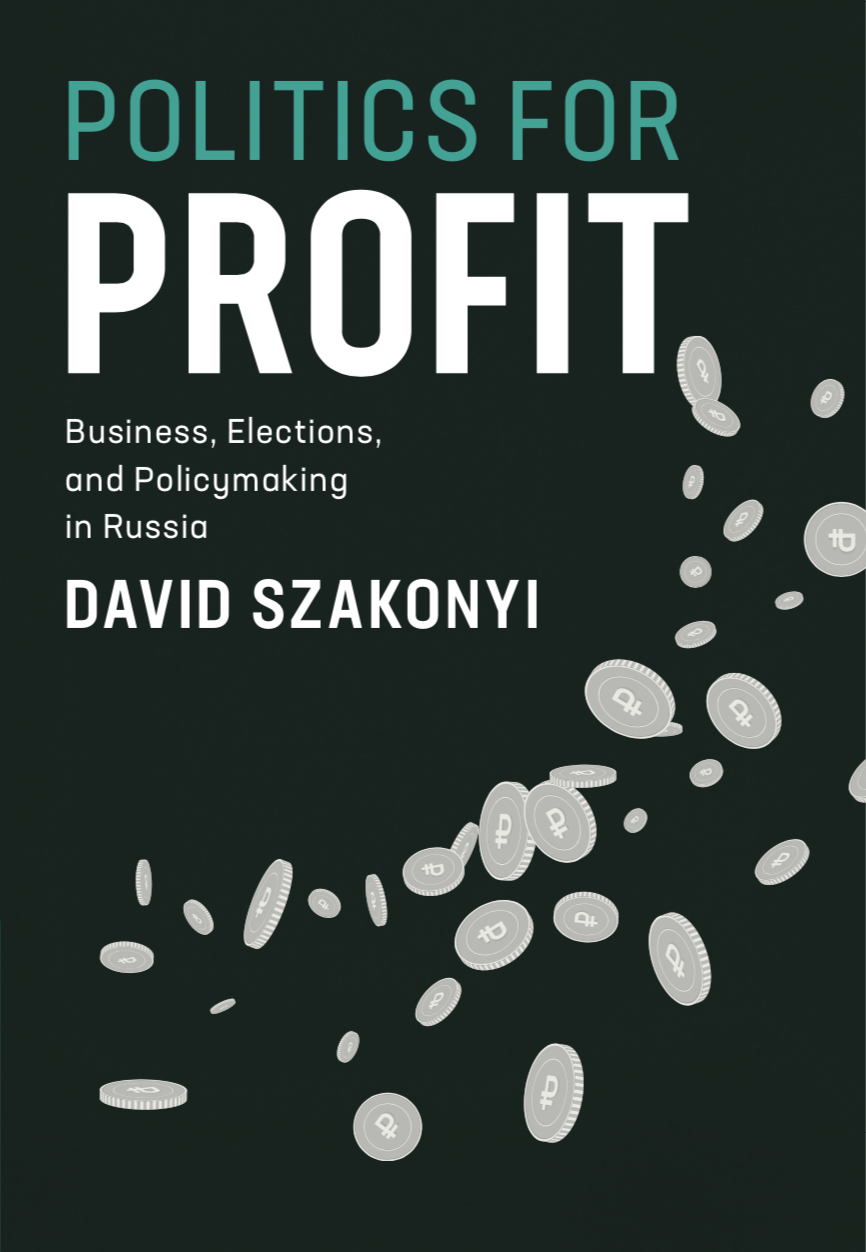
Politics for Profit: Business, Elections, and Policymaking in Russia, Cambridge University Press (Cambridge Studies in Comparative Politics), 2020.
Businesspeople run for and win elected office around the world, with roughly one-third of members of parliament and numerous heads of states coming directly from the private sector. Yet we know little about why these politicians choose to leave the private sector and what they actually do while in government. In Politics for Profit, I bring to bear sweeping quantitative and qualitative evidence from Putin-era Russia to shed light on why businesspeople contest elections and what the consequences are for their firms and for society when they win. The book develops an original theory of businessperson candidacy as a type of corporate political activity undertaken in response to both economic competition and weak political parties. My evidence then shows that businesspeople help their firms reap huge gains in revenue and profitability while prioritizing investments in public infrastructure over human capital. The book finally evaluates policies for combatting political corruption.
Reviewed in Perspectives on Politics, Foreign Affairs, Europe-Asia Studies, Slavic Review, Eurasian Geography and Economics, and Governance.
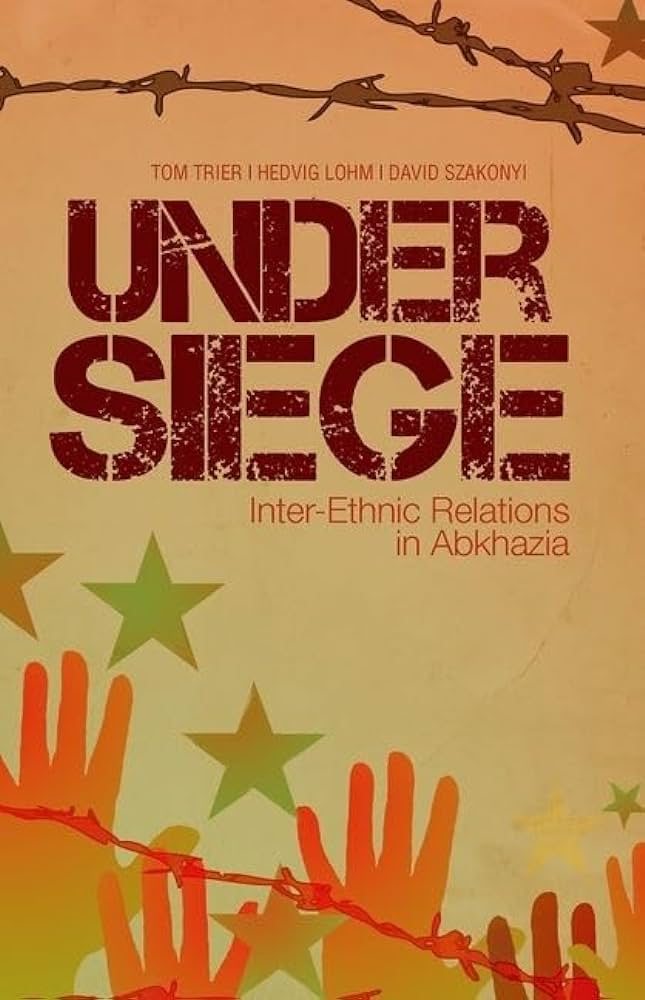
Under Siege: Inter-Ethnic Relations in Abkhazia. Columbia University Press, 2010 (with Tom Trier and Hedvig Lohm)
Located in the northeastern corner of the Black Sea, Abkhazia was once part of Georgia but broke away from the country after the fall of the Soviet Republic. For fifteen years the region functioned as a de facto independent, though internationally unrecognized, state, until August of 2008, when the short war over South Ossetia (another breakaway territory) ended in Russia's recognition of Abkhazian and South Ossetian sovereignty.
Consequently, Abkhazia has become a crucial component of Russia's struggle to redefine its global influence and a major player in its geopolitical battle with the West. Under Siege clarifies Abkhazia's ethno-political dynamics, which have played a major role in the country's state-building efforts and have come to shape the conditions under which the country's many ethnic communities live. Abkhazians, Armenians, Georgians, and Russians all call Abkhazia home, and this volume explores the effect of the government's de facto status on these groups' ideas of nationhood and continuing tensions between Georgia, Abkhazia, and Russia. This book also launches a rare investigation into the conflict brewing among human rights, minority protections, and Abkhazia's state building project.
Reviewed in Slavic Review, Europe-Asia Studies, Bulletin of the School of Oriental and African Studies, and Nationalities Papers.